| Welcome to "Web-based Instruction
in Assistive Technology for School Personnel". This course was
designed for a number of reasons. First, society's utilization
of technology continues to rise. You and I would find it very difficult
to conduct our daily business in the absence of assistive technology.
Daily, we use telephones, computers, electronic mail, pagers and cell
phones. In addition, the use of instructional technology
is beginning to permeate our classrooms. Consequently, we need
to be broadening our knowledge of how technology can benefit our students
with disabilities so we can offer them the most appropriate education
in the least restrictive environment. Technology will also be
the link that facilitates our students' abilities to compete in the
workplace and attend college. |
| |
| In this course, we will concentrate
on those assistive technology tools we feel have the greatest applicability
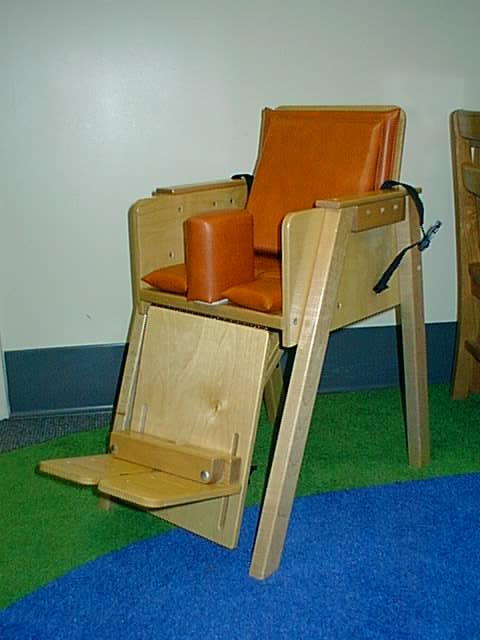
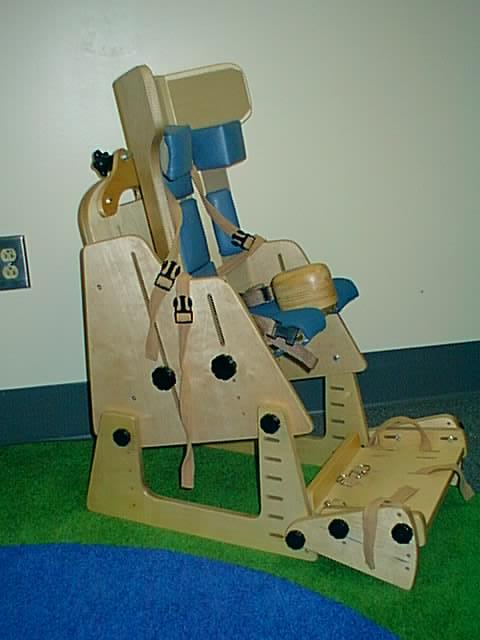
in the school setting: seating and positioning
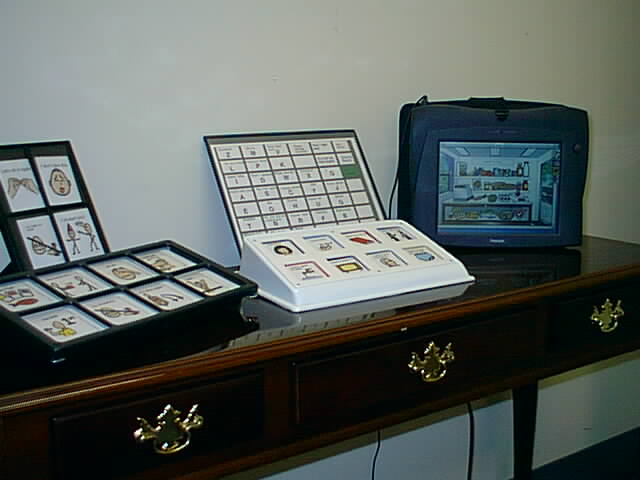
aids, mobility aids, communication
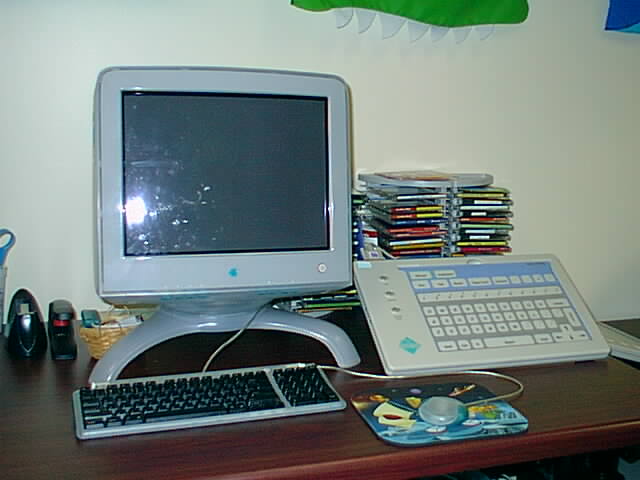
devices, and alternative writing
devices. Throughout the semester, you will develop
the skills necessary to evaluate for assistive technology tools and
implement the use of technology aids and devices within the context
of your curriculum. At the end of the course, you will receive
hands-on training on many of the assistive aids and devices you see
throughout the course. |
| |
| What is assistive technology? According
to Federal Law PL 100-404, Technical Assistance to the States Act,
assistive technology is "Any item, piece of equipment or product system
whether acquired commercially off the
shelf, modified, or customized that is used to increase or improve
the functional capabilities of individuals with disabilities".
This means that technically, ANYTHING that would facilitate a person's
ability to be more functional in their
daily activities would be considered assistive technology. So simple,
low cost solutions such as pencil grips and lined paper as well as
high technology computerized communication systems fall under the
category of assistive technology. |
| |
|
|
Created in December 2000
by Thierry Bacro, Ph.D, PT
|
|
Last updated
Sun November 4, 2001 8:31 PM
|
|
|